



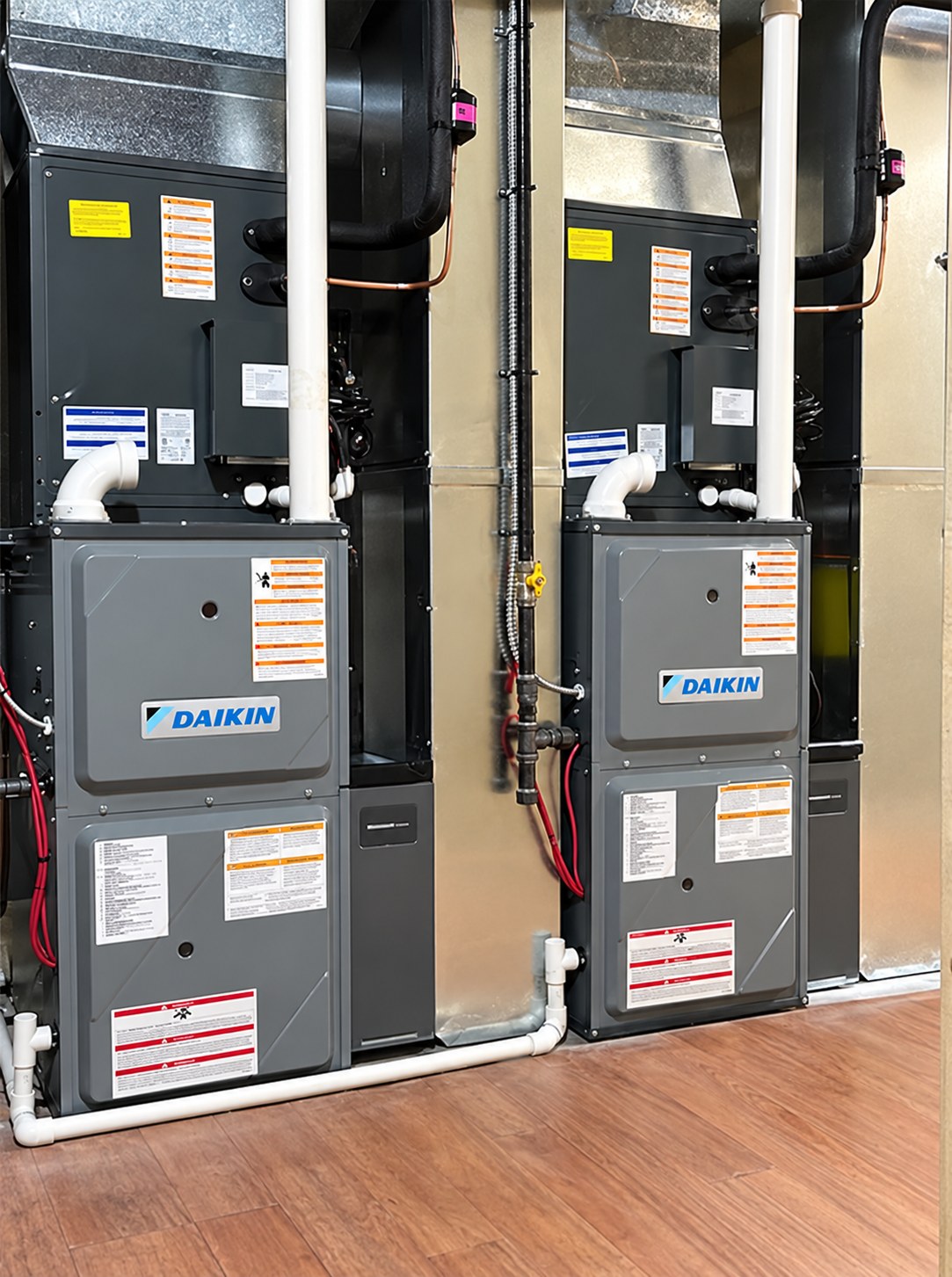
A gas furnace commonly lasts 15–20 years. Its condition, repair history and maintenance matter more than age alone.
A well-maintained gas furnace commonly lasts 15–20 years, although some systems need replacement sooner and others remain serviceable longer. This is a general planning range, not an Ontario-specific guarantee. Your furnace’s condition matters more than its age alone.
What affects your furnace’s lifespan?
Installation quality, equipment sizing, maintenance history and operating conditions influence how a furnace ages. For a homeowner in Barrie or elsewhere in Ontario, the useful question is whether the system still heats the home safely and reliably.
Keep service records and note changes in performance. Frequent breakdowns, uneven heating and unusual noises deserve an assessment rather than an assumption that the whole system needs replacing.
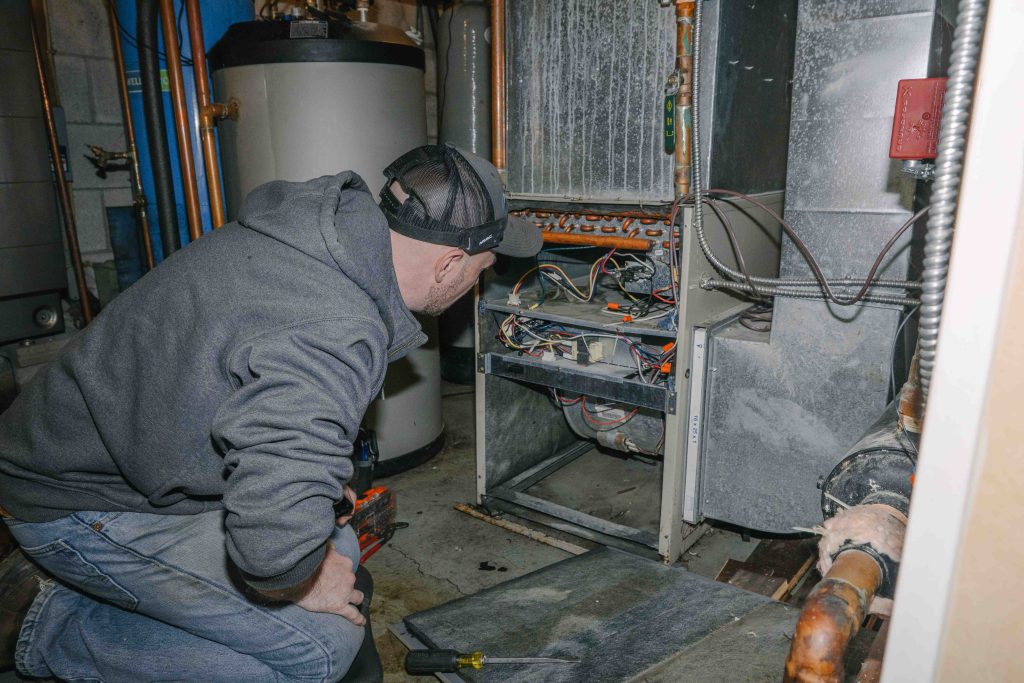
What does Daikin recommend about maintenance?
Daikin’s DR96TC installation manual calls for an inspection by a qualified installer or service agency at least once a year, at the beginning of the heating season. This is guidance for that equipment; always follow the manual for your own furnace. Professional maintenance is not a guarantee of a particular service life.
Ask your technician which maintenance tasks apply to your model and which filter specifications it requires. Leave internal inspections, gas components and ignition equipment to qualified professionals.
Should you repair or replace an older furnace?
Ask a technician to explain the fault, repair options and overall equipment condition. Compare the proposed repair with replacement costs, warranty coverage and your plans for the home.
A serviceable furnace does not automatically need replacement at a particular age. Equally, repeated repairs may justify discussing a new system. CORH’s furnace repair service in Barrie can help identify the problem. If replacement is appropriate, explore furnace installation options.
Plan before a breakdown
If you do not know your furnace’s age, check installation paperwork or ask a technician to help identify it from the equipment information. Bring previous repair invoices to your appointment.
To discuss your system’s condition, contact CORH or call 705-517-0174.
Build a useful record of your furnace
Before comparing repair and replacement options, gather the installation date, model information, service invoices and any warranty documents you have. If you inherited the furnace when you bought your home, check the paperwork from the purchase before guessing its age. A technician can help interpret the equipment label when the installation record is missing.
Make a short record of recent problems. Note the date, the symptoms and what was repaired. Separate a one-time fault from a pattern of repeat visits. This gives your service provider more useful context than simply saying the furnace is old.
Questions to ask before approving replacement
- What is the current fault, and what would the proposed repair address?
- Are there other condition or safety concerns that affect the recommendation?
- What do the repair and installation estimates include?
- Which parts and labour are covered by the applicable warranty?
- What information about my home is needed to select a suitable replacement?
Ask for the reasoning in writing so you can compare options without relying on a lifespan estimate alone. A warranty term and an expected service life answer different questions; review the actual coverage rather than assuming every future repair is included.
Common furnace lifespan questions
Should I replace a working furnace just because it is 15 years old?
Age is a reason to plan and assess condition, not a diagnosis. Discuss its reliability, service history and current inspection findings before deciding.
What if I cannot find the installation date?
Gather the model and serial information you can access safely and ask your service provider for help. The manufacturing date and installation date may not be identical.
What does a useful condition assessment look like?
A lifespan range is a starting point for a conversation. It does not tell you what is happening inside your particular furnace today. When you book an assessment, explain whether you want help with an active fault, an annual maintenance visit or planning for a future replacement. Those requests can involve different work, so it helps to establish the purpose before the appointment.
Ask the technician to separate observed findings from possibilities that need further investigation. You should understand which concern needs attention now, which recommendation is preventive and which choice is optional. If you are comparing repair with replacement, ask how the findings support each option. A clear explanation is more useful than a recommendation based only on the number of birthdays the furnace has had.
Compare the scope behind the estimate
Two estimates can describe different jobs even when both mention a furnace. Before comparing totals, check the equipment being proposed, the installation work included and any changes that require separate assessment. Ask how the existing ductwork, controls and access arrangements will be considered. Do not assume that a product name alone describes the complete installation.
For a repair estimate, ask which fault the work addresses and what remains uncertain. For a replacement estimate, ask what happens to the existing equipment, what commissioning and homeowner instructions are included and who handles follow-up questions. Request clarification about exclusions before approving work. Keep the written scope with your other equipment records so future service conversations have a reliable reference.
Plan the practical side of a furnace decision
Make a note of your priorities before the visit: reliable heating, understandable maintenance requirements or preparing for a future renovation. Share those priorities so the discussion addresses the questions that matter to you.
If the furnace is currently operating and you are planning ahead, use the time to gather information without choosing an arbitrary replacement deadline. Think about access to the mechanical area, your availability for appointments and any upcoming home renovations that the installer should know about. A planned discussion gives you room to ask questions and understand the proposed work.
If you have recently bought the home, start a new equipment file even when the previous owner left little paperwork. Record what you know and mark uncertain dates as estimates. Do not turn a guessed installation date into a confirmed fact. At the next service visit, ask what information can be established from the equipment and what remains unknown.
For a rental property, clarify who can authorize work and who will provide access. Give the service company the correct contact details for the person making the decision. This preparation does not predict how long the furnace will last, but it makes an eventual service or replacement decision easier to manage.
About CORH: furnace advice for your home
CORH serves homes and businesses in Barrie, Orillia, Innisfil and surrounding Simcoe County communities, with furnace installation and repair among its heating services.
When contacting the team, explain whether you need help with a current heating problem or want to plan for an older furnace. Bring your service history and the questions above. Ask for advice tied to the condition of your equipment and the needs of your home, then compare the proposed next steps before approving work.
Sources
- Carrier: general furnace lifespan guidance
- Daikin DR96TC installation manual: annual inspection and maintenance
Make the next step a clear one.
Discuss your heating or cooling needs with CORH in Barrie and Simcoe County.
Schedule a service →Disclaimer
This article provides general educational information compiled from reputable public sources, including manufacturer guidance. Conditions vary by property, equipment model, installation, maintenance and operating environment. This content is not a substitute for an inspection or advice from a qualified HVAC professional. Follow the instructions for your specific equipment and consult a qualified technician before undertaking repairs. Lifespan estimates are not guarantees. If you suspect a gas leak or a carbon monoxide alarm sounds, leave the building and contact emergency services or your gas utility from a safe location.