



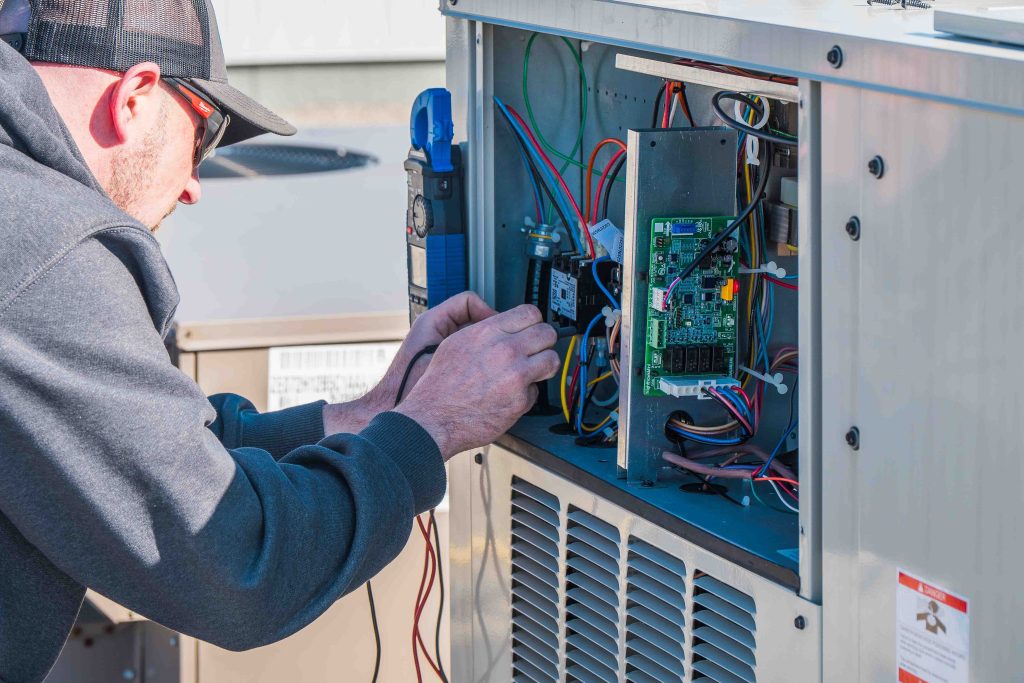
Turn cooling off if ice forms. Airflow and refrigerant faults can cause freezing, and thawing alone does not resolve the cause.
Ice on a central air conditioner is a sign that the system needs attention. Common causes include restricted airflow and refrigerant-related problems. Letting the ice melt may remove the visible symptom without fixing the underlying fault.
Why does ice form on an air conditioner?
The indoor cooling coil needs adequate airflow to absorb heat from your home. A dirty filter, restricted airflow or a blower problem can interfere with that process. Refrigerant-related faults can also cause freezing. Ice alone cannot identify which cause applies.
Daikin explains that air conditioning works by transferring heat out of a room rather than creating cold. That helps explain why both airflow and the cooling circuit matter, but it does not diagnose an individual system.
What should you do first?
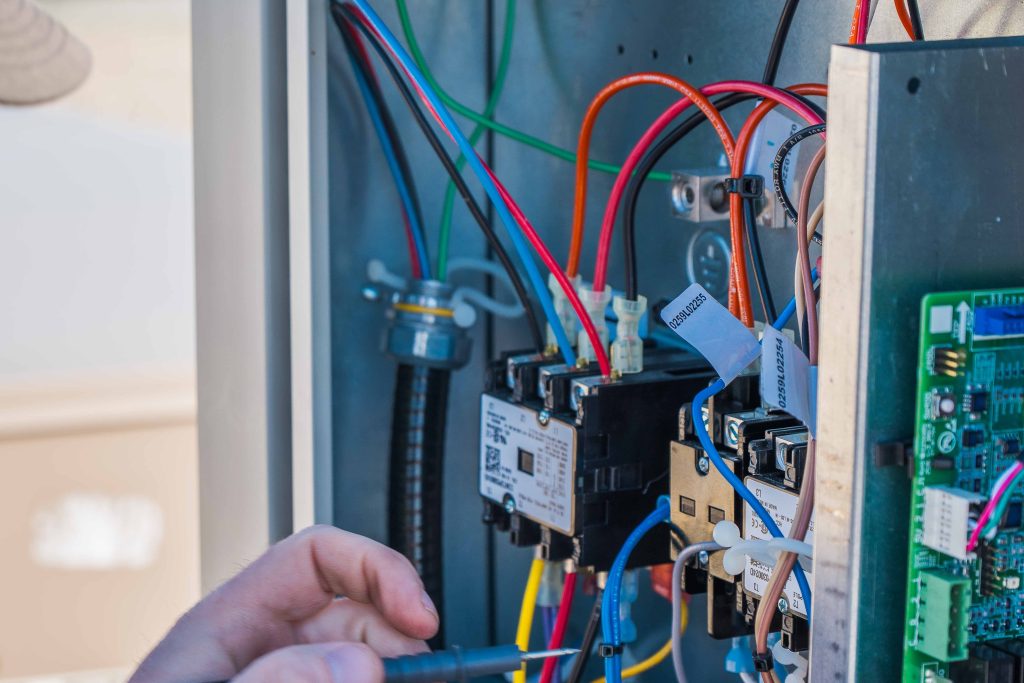
Turn cooling off and arrange an assessment. Carrier Canada recommends shutting down a system with a frozen evaporator coil and contacting a professional.
Do not chip ice away or apply direct heat to the equipment. Follow the homeowner instructions for your model and leave internal inspections to a technician. Do not restart cooling simply because the visible ice has disappeared if the cause remains unresolved.
Check only the basics covered by your manual
When safe and permitted by the manufacturer’s instructions, check the accessible filter and make sure vents are not blocked. Record what you observed before turning cooling off: reduced airflow, ice location, unusual noises or a thermostat that could not reach its setting.
Daikin’s DX17VSS manual calls for an indoor filter and recommends professional checkups before heating and cooling seasons. These instructions apply to that equipment; your own manual determines the maintenance requirements for your system.
Does a frozen AC need more refrigerant?
Not necessarily. Airflow problems can also cause freezing. Refrigerant should not be added based on this symptom alone. A qualified technician should identify the cause and determine the repair.
For diagnosis, explore CORH’s air conditioner repair service. For routine equipment care, see its air conditioning service.
Contact CORH or call 705-517-0174 if your system freezes or stops cooling properly.
Describe the problem without opening the equipment
Once cooling is off, make a note of where you noticed ice, when it appeared and whether the airflow had changed. Describe what the thermostat was doing and whether the home was becoming warmer despite a cooling request. Only photograph parts that are visible without removing covers or approaching electrical components.
Tell the service provider whether this has happened before and what work was carried out at that time. A repeat freeze-up deserves a clear explanation of the cause rather than an assumption that the previous fix will apply again.
What should a repair conversation cover?
Ask which issue the assessment identified, what the proposed work addresses and whether any follow-up is needed. If refrigerant work is recommended, ask the technician to explain the findings. Do not treat a refrigerant addition as the automatic answer to every frozen coil.
Before using cooling again, follow the service provider's advice for your equipment. A system that has thawed can still have the fault that caused the ice in the first place.
Common questions about a frozen air conditioner
Should I scrape the ice off?
No. Avoid chipping ice away or applying direct heat. Leave the system off and follow professional guidance.
Does ice prove that the refrigerant is low?
No. Airflow and refrigerant-related faults are both possible. An inspection is needed to distinguish the cause.
Can a photo replace a service inspection?
A photo can help explain what you observed, but it cannot establish the condition of the entire system or replace the checks needed for a diagnosis.
Keep the symptom separate from the diagnosis
Ice is an observation you can report, but it is not a complete explanation of what went wrong. Two homes can show a similar visible symptom for different reasons. Avoid ordering a particular repair simply because a neighbour had the same problem or an online example looks familiar. Describe what you saw and let the assessment establish which work is appropriate.
Likewise, melting ice does not demonstrate that the system is repaired. When discussing the next step, distinguish between the equipment thawing and the underlying concern being addressed. Ask the service provider what needs to happen before cooling is used again. Follow instructions for your specific equipment rather than testing it repeatedly to see whether the ice returns.
Make a short timeline for the service team
Write down when you first noticed reduced cooling, when you saw ice and when you switched cooling off. If you remember a change in airflow, a recent filter replacement or previous service work, include that information. Say when a detail is uncertain. An approximate timeline labelled as approximate is more useful than a precise time you cannot actually confirm.
If water is visible around the equipment, mention its location during the call. Do not approach exposed electrical parts or dismantle anything to investigate the source. Ask the service team how to manage the situation safely while waiting. A photograph taken from a safe, accessible position can help communicate the location, but it cannot establish the full extent or cause of a problem.
Understand what the proposed work addresses
Ask the technician to explain the findings and the link between those findings and the recommended work. If the discussion concerns airflow, ask which part of the system needs attention. If it concerns refrigerant, ask what the assessment established and what the proposed service includes. These questions help you understand the scope without trying to perform the checks yourself.
Before approving work, clarify the estimate, any exclusions and whether another visit may be necessary. Ask what remains uncertain if the full scope cannot yet be established. Keep the explanation and invoice so that a future technician can see what was investigated and completed. This is especially helpful when the freeze-up has happened more than once.
Agree on a plan for using the system again
At the end of the appointment, ask for the operating and maintenance instructions that apply to your model. Confirm which tasks are suitable for a homeowner and which need professional service. If you are given a follow-up recommendation, record the reason and proposed timing rather than relying on memory.
For a shared or rental home, pass those instructions to the person who manages the thermostat and arranges maintenance. Keep a simple record if symptoms return, then contact the service provider with the earlier invoice reference. A clear handover helps everyone follow the same instructions and gives the next conversation useful context.
About CORH: support for cooling problems
CORH serves Barrie, Orillia, Innisfil and surrounding Simcoe County communities, providing air conditioner repair and installation alongside other heating and cooling services.
When calling about ice, explain that cooling has been switched off and describe what you observed. Share any previous repair history and ask about the next step for an assessment. The aim is to understand the cause and the proposed work for your system before deciding how to proceed.
Sources
- Carrier: frozen AC coils and common causes
- Carrier Canada: troubleshooting a frozen evaporator coil
- Daikin: how air conditioners transfer heat
- Daikin DX17VSS manual: routine maintenance recommendations
Make the next step a clear one.
Discuss your heating or cooling needs with CORH in Barrie and Simcoe County.
Schedule a service →Disclaimer
This article provides general educational information compiled from reputable public sources, including manufacturer guidance. Conditions vary by property, equipment model, installation, maintenance and operating environment. This content is not a substitute for an inspection or advice from a qualified HVAC professional. Follow the instructions for your specific equipment and consult a qualified technician before undertaking repairs. Lifespan estimates are not guarantees. If you suspect a gas leak or a carbon monoxide alarm sounds, leave the building and contact emergency services or your gas utility from a safe location.